
Techniques to Help with Anxiety
Anxiety can feel overwhelming. Your heart races. Your thoughts spiral. Your body goes into fight-or-flight mode before you’ve had time to think.
The good news? There are practical, research-supported techniques that can help regulate your nervous system in the moment.
Below are several tools we often recommend to clients when anxiety spikes: TIPP skills, box breathing, and grounding techniques.
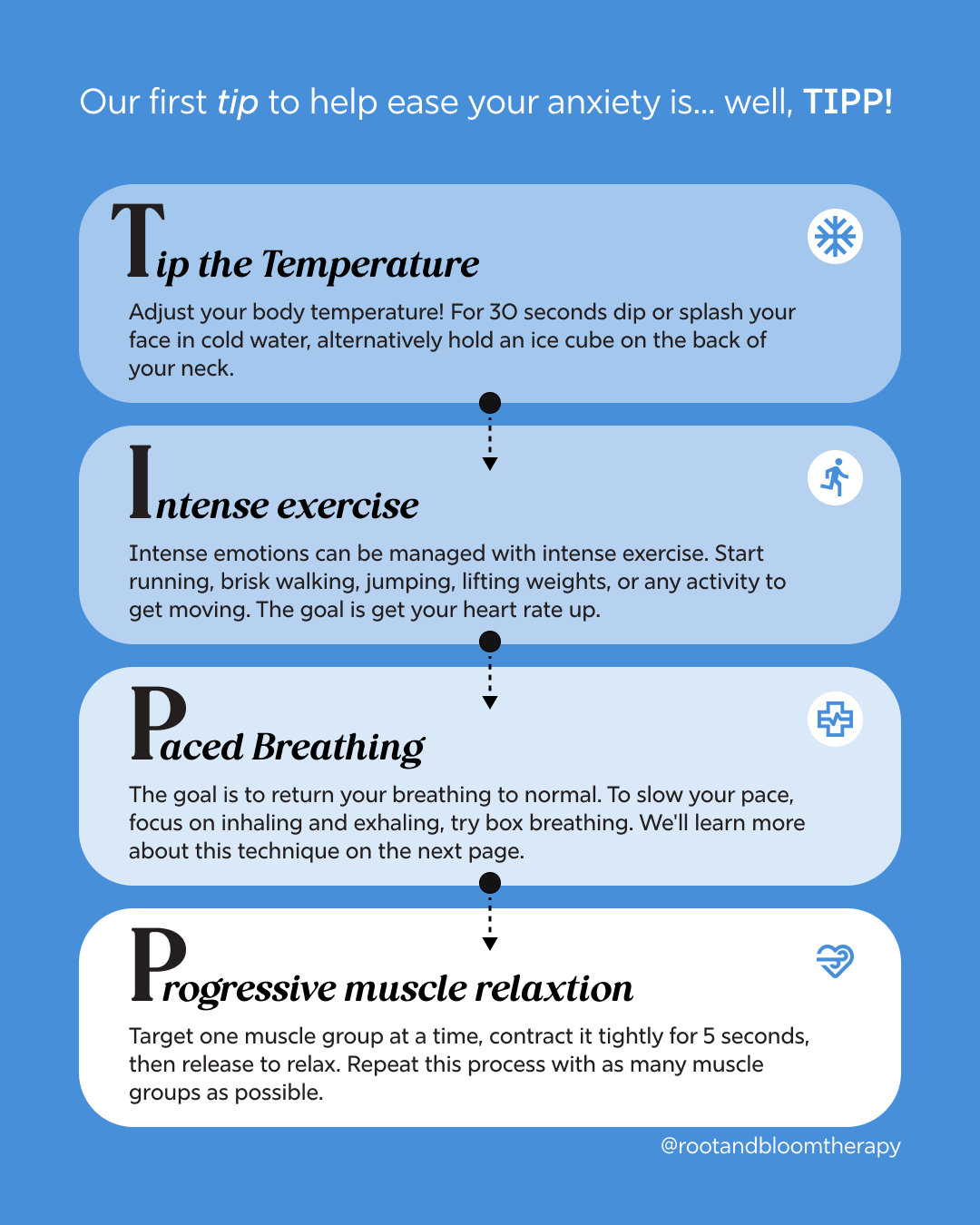
1. TIPP Skills for Immediate Anxiety Relief
TIPP is a Dialectical Behavior Therapy (DBT) skill designed to quickly regulate intense emotions. It works by targeting your body first — because when your physiology calms down, your mind often follows.
T — Tip the Temperature
Cold exposure can activate the mammalian dive reflex, which slows heart rate and helps regulate the nervous system.
Try:
Splashing cold water on your face for 30 seconds
Holding an ice cube
Placing something cold on the back of your neck
This can quickly interrupt the anxiety surge.
I — Intense Exercise
When anxiety activates your fight-or-flight response, your body is prepared for action. Brief bursts of intense movement help “complete” that stress cycle.
Try:
Running or brisk walking
Jumping jacks
Lifting weights
Fast stair climbing
Even 1–3 minutes can help reduce physical agitation and lower stress hormones.
P — Paced Breathing
Slowing your breath signals safety to your nervous system.
We’ll go deeper into this below with box breathing — but the goal is simple: breathe slower and deeper than you naturally would during anxiety.
P — Progressive Muscle Relaxation
Anxiety creates muscle tension, often without us noticing. Progressive muscle relaxation helps your body release stored tension.
Try this:
Tighten one muscle group (like your shoulders) for 5 seconds.
Release fully.
Move to the next muscle group.
Work through your body slowly. The contrast between tension and relaxation helps reset your physical stress response.
Box Breathing: A Simple, Powerful Reset
When panic hits, breathing becomes shallow and fast. This can increase dizziness, chest tightness, and a sense of losing control.
Box breathing helps regulate that pattern.
Here’s how:
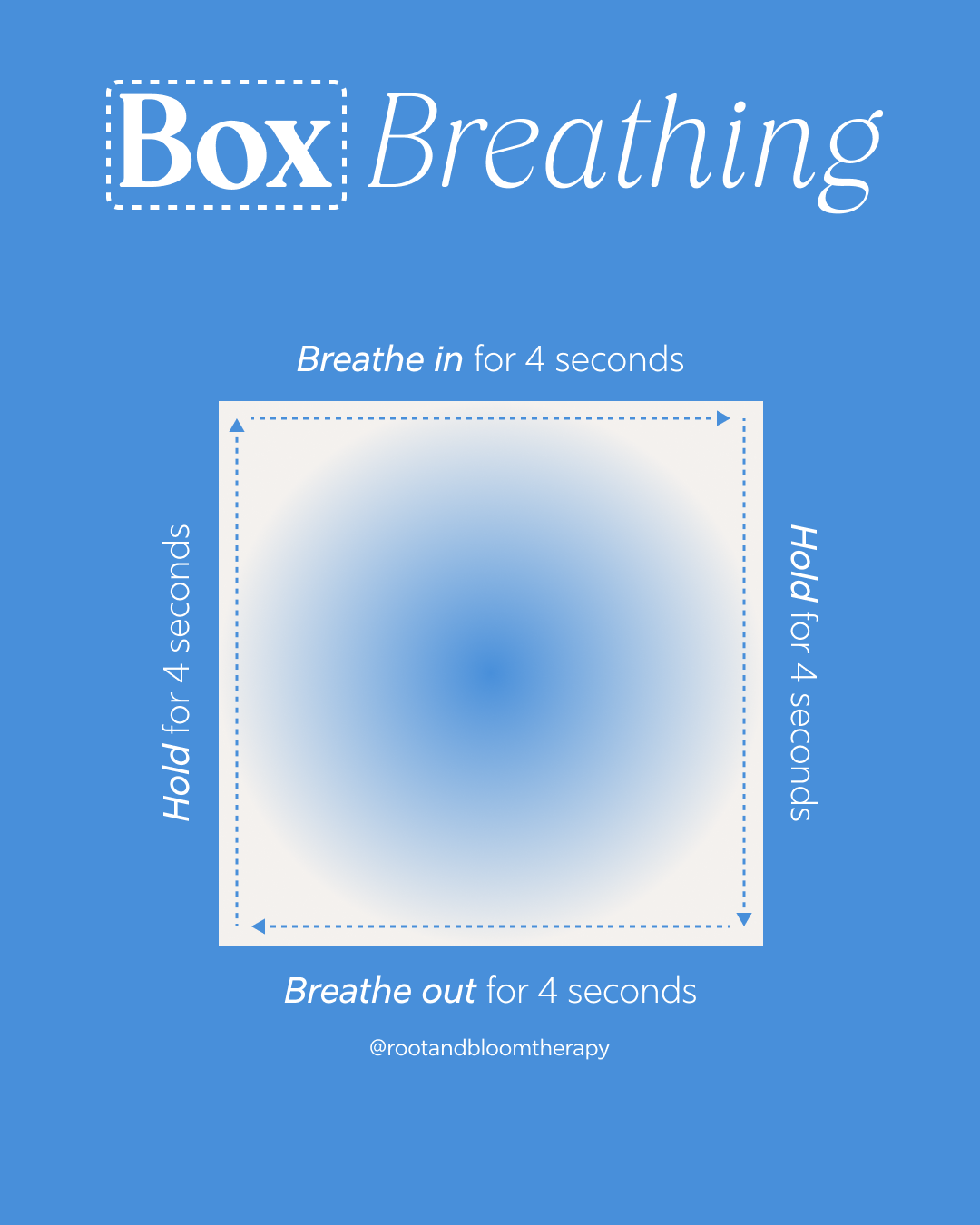
Inhale for 4 seconds
Hold for 4 seconds
Exhale for 4 seconds
Hold for 4 seconds
Repeat
Think of tracing a square with your breath.
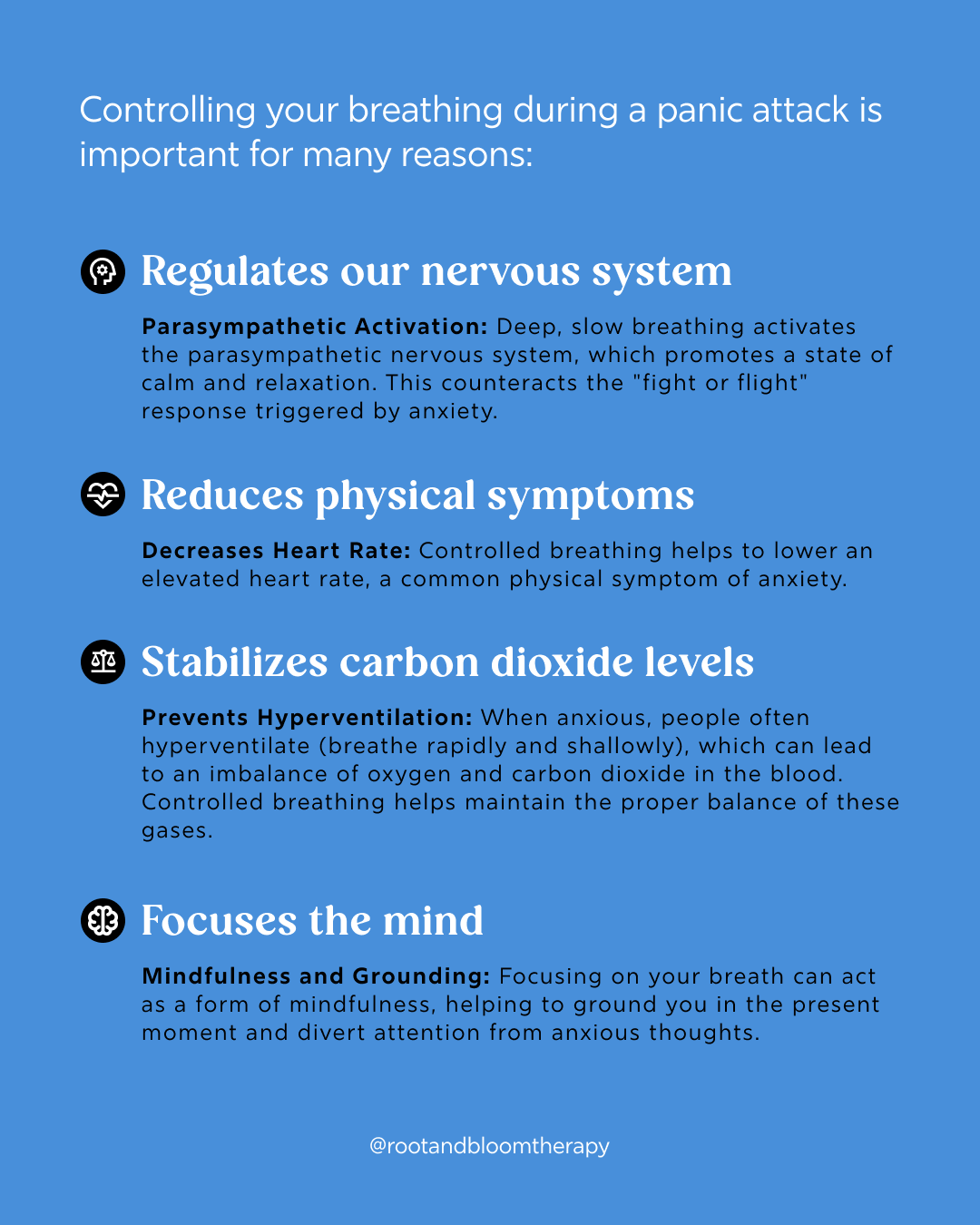
Why It Works
Controlled breathing:
Activates the parasympathetic nervous system (your “rest and digest” system)
Lowers heart rate
Stabilizes carbon dioxide levels (preventing hyperventilation symptoms)
Redirects focus away from anxious thoughts
It’s simple — but physiologically powerful.
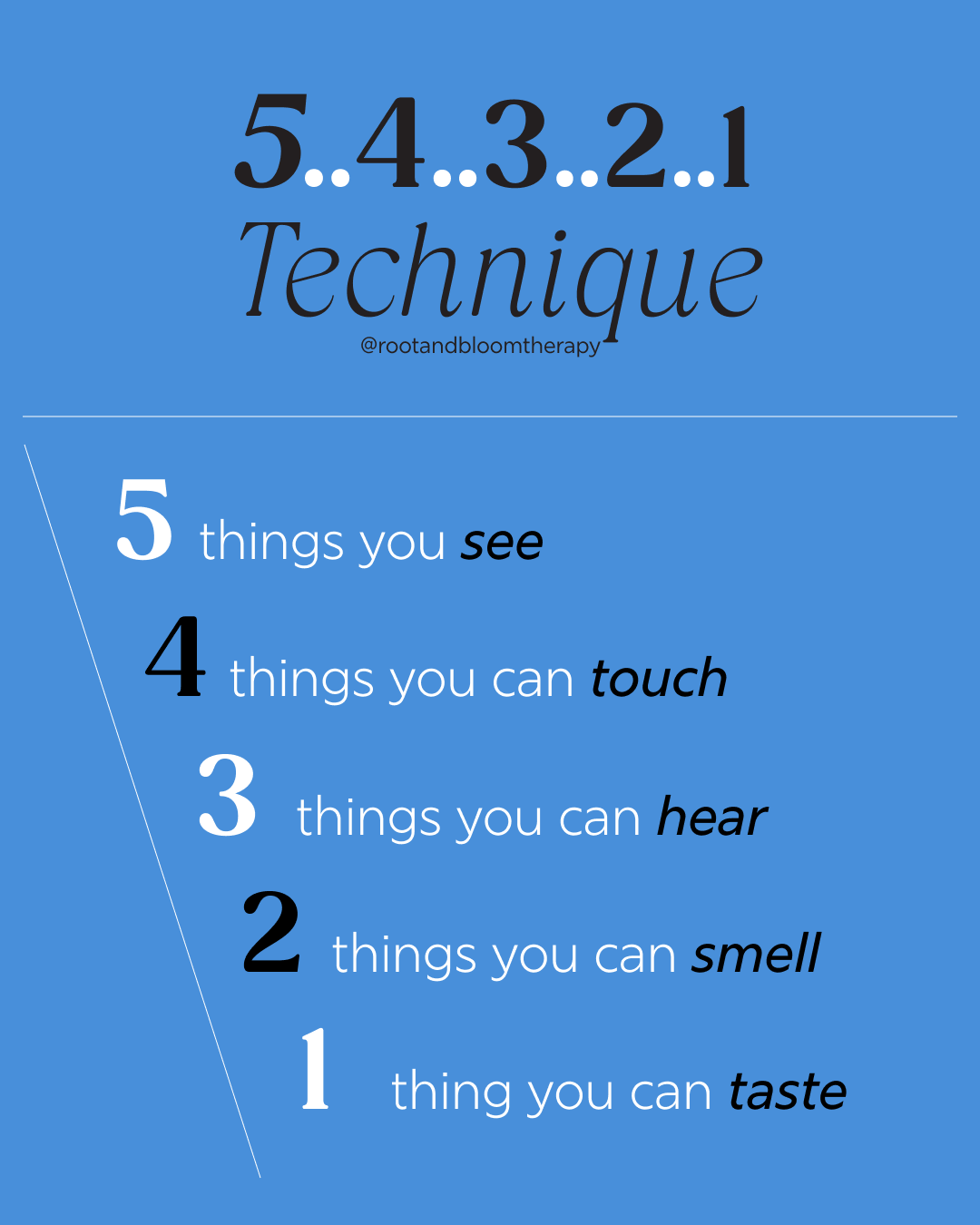
5-4-3-2-1 Grounding Technique
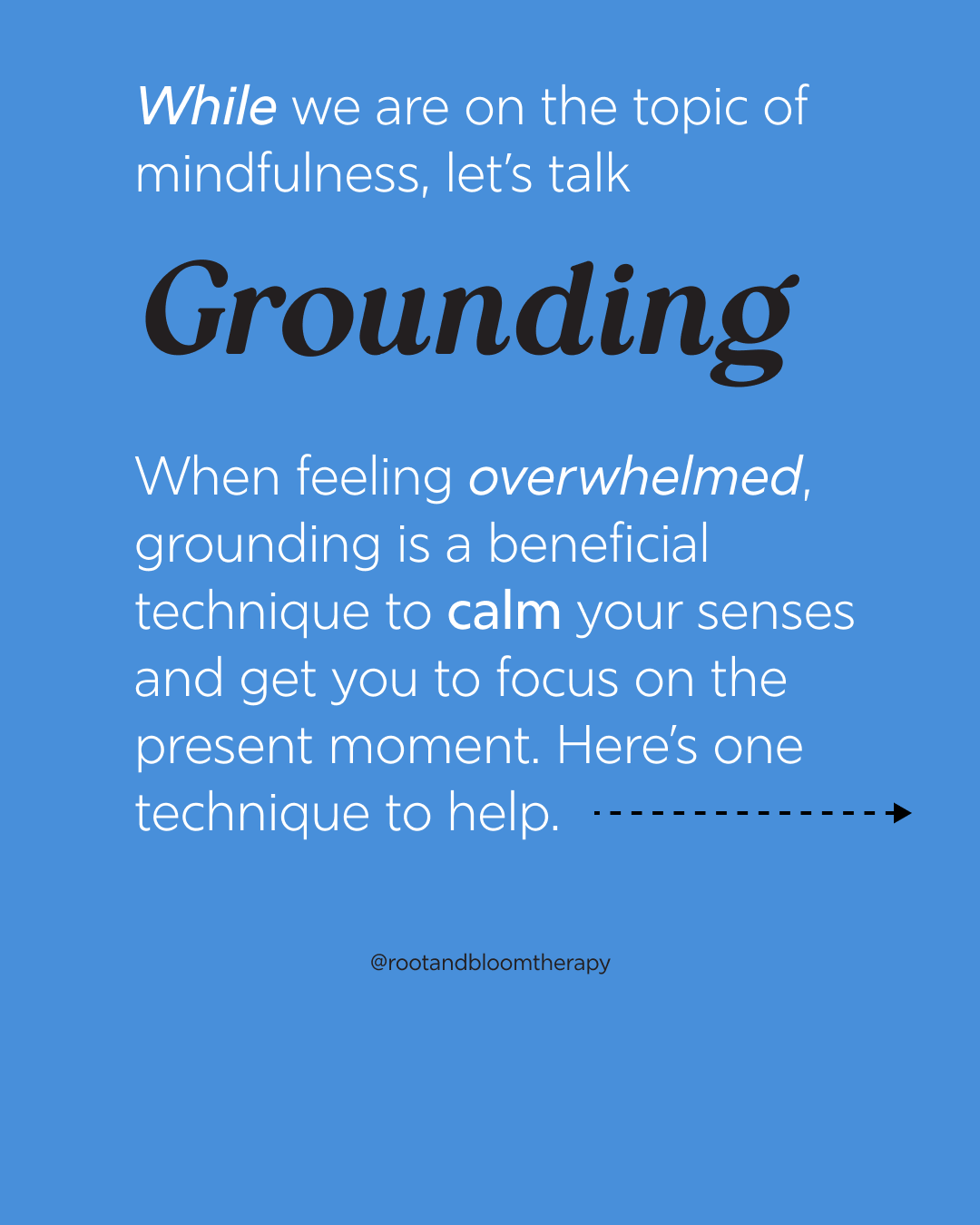
When anxiety pulls you into “what if” thinking, grounding brings you back to the present moment.
Try this sensory reset:
5 things you see
4 things you can touch
3 things you hear
2 things you smell
1 thing you taste
This technique shifts attention from internal worry to external reality, helping your brain recognize that you are safe in this moment.
Grounding is especially helpful during:
Panic attacks
Overwhelm
Racing thoughts
Dissociation
Why These Techniques Matter
Anxiety isn’t just “in your head.” It’s a full-body experience.
When you regulate your nervous system:
Your heart rate decreases
Muscle tension reduces
Breathing stabilizes
Cognitive clarity improves
You don’t have to wait for anxiety to pass. You can actively influence your body’s response.
When Techniques Aren’t Enough
While these skills are powerful, they are tools — not a complete solution.
If you find:
Anxiety is interfering with daily life
Panic attacks are frequent
Avoidance is increasing
Sleep or concentration are suffering
It may be time for deeper support.
Therapy can help you:
Identify root causes of anxiety
Build long-term coping skills
Address underlying trauma or stress patterns
Create sustainable change
You Don’t Have to Manage Anxiety Alone
At Root & Bloom, we understand how exhausting anxiety can feel. If you’re ready to move beyond short-term coping and toward long-term healing, we’re here to help.